
PhD student in Astronomy
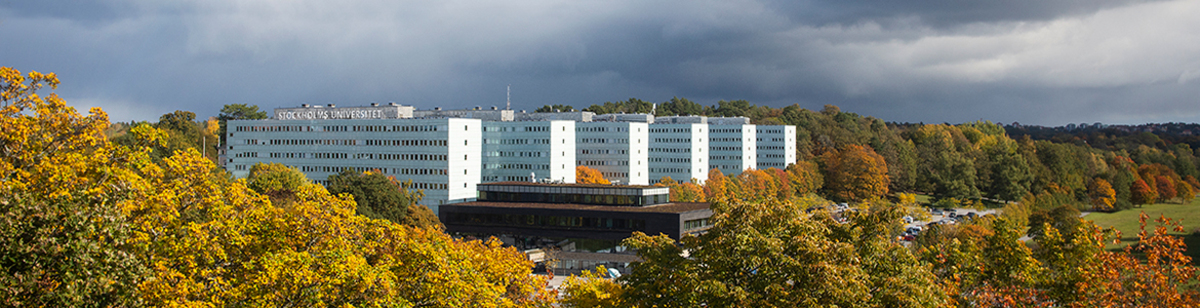
The Department of Astronomy at Stockholm University has about 80 employees, of which 25 are PhD students. The main research areas of the institute are Galaxies, Supernovae, Computational Astrophysics, Solar Physics, Exoplanets and Stellar Physics. More information about us, please visit: the Department of Astronomy.
Project description
Up to six positions will be available in the areas of Stars, Exoplanets, Supernovae/Computational Astrophysics, Galaxies, and Cosmology.
Stars: One position will be supervised by Dr. Karin Lind and will be available in stellar spectroscopy, with a focus on exploiting data from the 4MOST survey. The main task will be the development of a 3D non-LTE spectral analysis pipeline tailored to large spectroscopic datasets. This methodological work will be combined with scientific applications in a chosen area, such as stellar physics, the star-planet connection, chemical tagging, or Galactic archaeology. The project aims to improve the accuracy of stellar abundance determinations and to use these advances to address key questions about the formation and evolution of elements and stellar populations in the Milky Way.
Exoplanets: One position will be supervised by Dr. Alexis Brandeker and will be available in exoplanet research, aimed at characterising exoplanets and their atmospheres through the development and application of analytical tools to data obtained from state-of-the-art observational facilities, both space-based and ground-based. Particular emphasis will be placed on the study of long-period exoplanets, which experience environmental conditions more comparable to those of Earth than those of currently well-studied exoplanets.
Supernovae/Computational Astrophysics: One position will be supervised by Dr. Evan O'Connor and will be available on high performance computer simulations of core-collapse supernovae with a strong focus on extreme progenitors and magnetorotational driven explosions. The project will be part of a larger ERC project COMPACTARS which is using state-of-the-art neutrino-radiation hydrodynamic simulations to understand the inner workings of magnetically dominated explosions including GRB supernovae and superluminous supernovae. Within the project there are also opportunities to develop the next generation of simulation software, predict the multimessenger signals, and develop expertise in neutrino and nuclear microphysics.
Galaxies: One position will be supervised by Dr. Angela Adamo and will be available within the galaxy group, with a particular focus on investigations of star cluster formation and feedback across cosmic time. The PhD student will analyse JWST imaging and spectroscopy, complemented by ground-based observations, of emerging star clusters in local galaxies as well as high-redshift lens galaxies where star cluster physical scales can be resolved. The goal is to get a better understanding of the dominant processes that connect star clusters to their host galaxies.
Cosmology: One or two position will be supervised by Prof. Axel Brandenburg jointly with Prof. Chiara Caprini and will be available within the ERC Synergy Grant COSMOMAG (2026-2032) studying the very first microseconds of the universe. The COSMOMAG project aims at pinning down the origin of cosmological magnetic fields by developing a unified framework tackling the problem from the initial conditions in the early universe up to observations in the present universe: we will study the magnetic field generation in the early universe, use numerical methods to evolve them throughout the universe and predict observable signatures today, to be tested mainly via gamma-ray, radio and gravitational waves observations. In particular, one of the PhD students will focus on the early universe dynamics and the other on the dynamics during the recombination era. The PhD students will be affiliated at Nordita at Stockholm University.
Qualification requirements
In order to be admitted to postgraduate education, the applicant must have the general and specific entry requirements. The qualification requirements must be met before admission to the research education.
You meet general entry requirements if you have completed a second-cycle degree, or completed courses equivalent to at least 240 higher education credits, of which 60 credits must be in the second cycle, or have otherwise acquired equivalent knowledge in Sweden or elsewhere.
In order to meet the specific entry requirements, the applicant for a studentship at a researcher level in astronomy must have completed 60 credits of non-overlapping courses in physics/astronomy at an advanced level. Of these, at least 30 credits should be in the form of independent work in astronomy, with a passing grade. The specific entry-level requirements can also be fulfilled through having equivalent documented competence.
Selection
The selection among the eligible candidates will be based on their capacity to benefit from the training. The following criteria will be used to assess this capacity:
- documented knowledge in a relevant field of research
- capacity for analytical and creative thinking
- initiative
- independence
- ability to collaborate
- written and oral proficiency in English.
Admission Regulations for Doctoral Studies at Stockholm University.
About the employment
We offer a fixed-term employment as a doctoral student according to Chapter 5 of the Higher Education Ordinance (1993:100). The period of employment may not be longer than what corresponds to full-time doctoral education for four years. As a doctoral student, you should primarily devote yourself to your own doctoral education, but the employment may include work with education, research and administration to a limited extent (maximum 20 %).
A new employment as a doctoral student is for a maximum of one year, the employment is then renewed for a maximum of two years at a time.
Stockholm University strives to be a workplace free from discrimination and with equal opportunities for all.
Contact
Information regarding the position in Stellar spectroscopy can be obtained from Dr. Karin Lind, karin.lind@astro.su.se.
Information regarding the position in Exoplanets can be obtained from Dr. Alexis Brandeker, alexis@astro.su.se.
Information regarding the position in Supernovae/Computational Astrophysics can be obtained from Dr. Evan O’Connor, evan.oconnor@astro.su.se.
Information regarding the position in Galaxies can be obtained from Dr. Angela Adamo, angela.adamo@astro.su.se.
Information regarding the positions in Cosmology can be obtained from Prof. Axel Brandenburg, axel.brandenburg@su.se.
Information regarding the PhD programme can be obtained from the Director of Graduate Studies professor Markus Janson, markus.janson@astro.su.se.
Application
Apply for the PhD student position at Stockholm University's recruitment system. Attach a CV and a personal letter, which should include information about which of the science areas you are interested in, why you are interested in the position, and why you are well suited for the position. Please also include the other attachments requested in the application form. It is the responsibility of the applicant to ensure that the application is complete in accordance with the instructions in the job advertisement, and that it is submitted before the deadline.
Letters of recommendation (2-3) should be sent separately to: fv-0430-26.refletters@astro.su.se.
The instructions for applicants are available at: How to apply for a position.
| Type of employment | Temporary position |
|---|---|
| Contract type | Full time |
| Salary | Fixed salary |
| Number of positions | 6 |
| Full-time equivalent | 100 % |
| City | Stockholm |
| County | Stockholms län |
| Country | Sweden |
| Reference number | SU FV-0430-26 |
| Union representative |
|
| Published | 16.Feb.2026 |
| Last application date | 16.Mar.2026 |